A PERSPECTIVE FROM 17 Sport’s NATHALIE PETZOLD
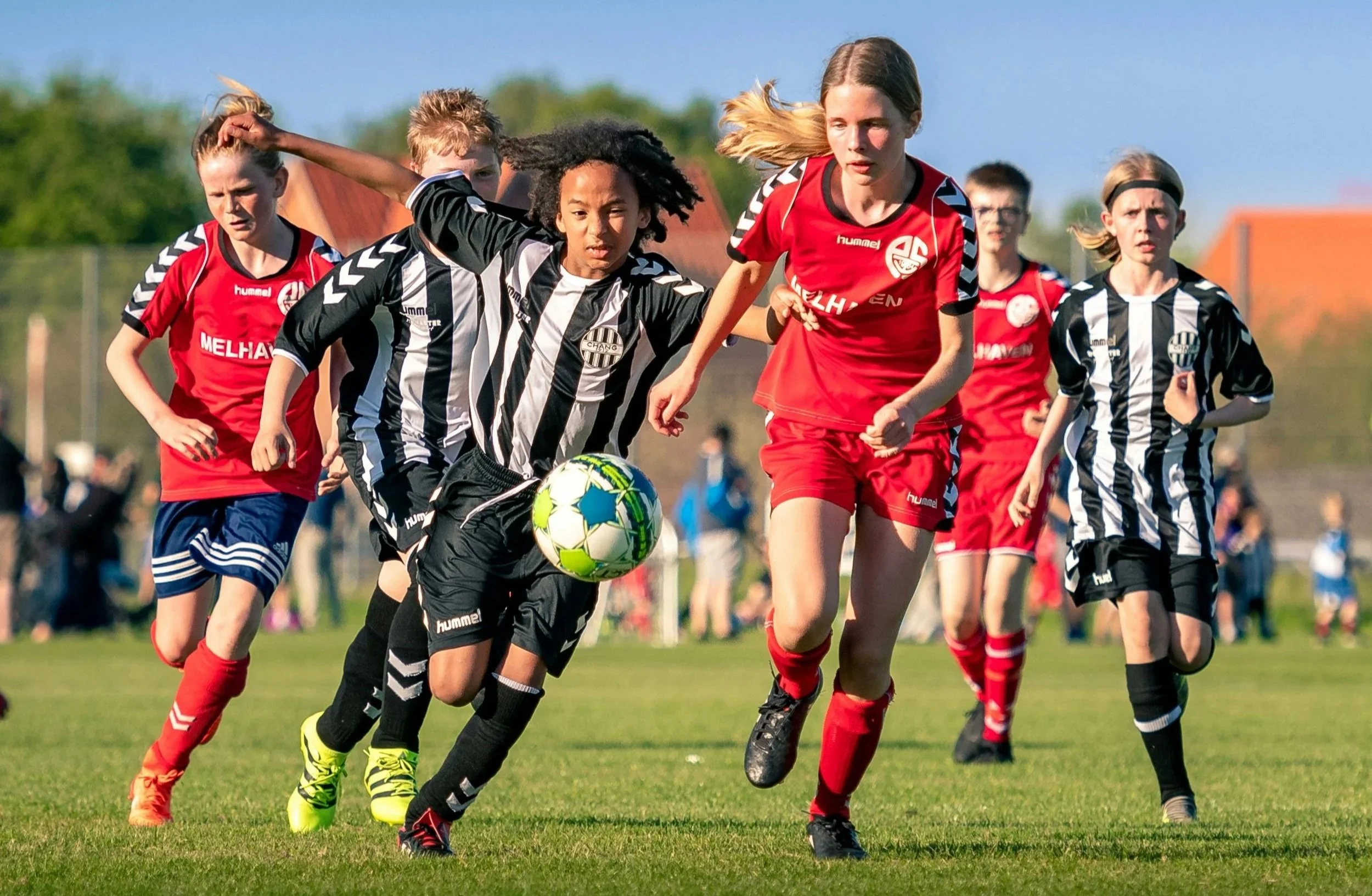
When I was 8 years old, my dad took me to a soccer practice of our local women’s club, encouraging me to try it out. I immediately fell in love with the game, and despite many barriers along the way - flooded pitches, 9am away games with no team bus available, grown men who didn’t take my sport seriously, and grown women who commented on my body instead of my performance - I have kept on playing.
I’ve always been aware of how hard it is for many girls to play a sport, especially if it’s dominated by men. Once we are in the sport, we have to deal with prejudices, limited resources, and a lack of support, making it hard for many clubs and coaches to keep girls in the game.
However, working at 17 Sport I discovered another side of the story. Contributing to the management of programs like the adidas Breaking Barriers Project (2020-2025) and the Allianz Partners Connecting with Champions program (leading up to LA2028), I frequently speak with nonprofit organizations advancing gender equity in sports, and Paralympic athletes. During those discussions, I often hear stories like “My father inspired me to try swimming, helping me discover my love of the water” or “There was no access to para sports in my area, but I was lucky to be discovered by a scout.”
It made me realize that young girls and people with disabilities often need one person - a parent, a friend, a scout - to open the door for them, and show them what is possible. If you don’t have this person in your life, you might never know that the sport exists, or how to access it.
Something we often forget is that a lot of children don’t have this person, and thus don’t get any access to playing sports.
STRUCTURAL PROBLEMS ACROSS SOCIETY
The data backs this up and it points to structural problems which can be found in all parts of society.
European research has shown that 1 in 5 girls found previous negative experiences of sport at school as one of the most challenging barriers to sports participation, and a third of girls reported not finding a female-only or mixed-gender team in their area.
In the UK, only 25% of children with a disability participate in sports activities at school year-round, compared to 41% of able-bodied children. Furthermore, children with a disability are 43% more likely than able-bodied children to move less than 30 minutes per day.
So, we can’t continue to assume that all children have similar access to sports. If you ask me, the two main aspects to change the game are visibility and education.
First of all, we need to make sure that young girls and children with disabilities see themselves represented, and can picture a world where they play a sport themselves.
TV shows and movies, even the most progressive ones, rarely show girls as athletes. And personally, I can’t think of a single example that shows a paralympic sport on mainstream TV shows.
It’s a good first step to show more professional women’s and para sports on TV and social media, but it’s not enough. For some children, it might be great to see a professional athlete and imagine themselves in their shoes one day. However, most children might not want to become a professional, and thus need to see that there are also ways for them to compete on an amateur level, or play sports without competing at all. Therefore, girls and disabled children need to be shown playing sports in (non-sport) TV shows, movies, commercials and advertisements, so that every kid feels like they could do the same.
As for education, we should make sure that children are not reliant on a parent, sibling, or friend to show them that a certain sport or club exists, but instead this should be done by the school.
In schools, girls and boys are often separated in PE class, not giving them the chance to try out a sport they might potentially like. For young adults with a disability, there are often no opportunities to practice sport on a school or club level, unless they join a team of able-bodied students, and likely are not selected to play.
Clubs and local sports programs should be able to introduce themselves in schools on a regular basis, and teachers should be educated on how to recognise a talent or passion in a girl or child with a disability, and know how to refer them to the right club or program.
THE ROLE OF BRANDS AND SPORTS PROPERTIES
Of course, it’s not that simple. Schools and sports clubs often have limited resources and capacity, and TV shows and movies might focus on their story rather than giving visibility for girls and children with disabilities in sports. But this is exactly where brands and sports properties could (and should) get involved. There are endless possibilities for them to create meaningful impact, for example through community programs that upskill teachers and promote sports organizations, or through purpose-led campaigns that bring girls and children with disabilities in sports into the mainstream media.
At 17 Sport, we know that by addressing an important societal issue like this one, brands and sports properties could build brand value, reinforce their purpose, and deepen audience connection through authentic action and real-life impact.
It’s clear that girls and children with disabilities face significant challenges in accessing sports - which is troubling, given the many advantages that regular physical activity, especially in organized sports, can have for a child.
The most obvious point is the health component. According to the NHS, able-bodied children between 5 and 18 should “aim for an average of at least 60 minutes of moderate or vigorous intensity physical activity a day across the week” and children living with a disability should “aim to do 20 minutes of physical activity a day”.
It’s also widely known that girls who play sports are more likely to occupy leadership positions when they’re older, as 94% of women in C-suite executive positions are former athletes.
Sports helped me gain confidence
But to me, there are so many more reasons why sports are crucial for children and young adults. Sports helped me gain confidence, learn how to manage difficult situations and deal with losses, and work as a team. I also met some of my closest friends through sport, and my team felt (and still feels) like family. So even if you don’t plan to be a professional player, or a C-suite executive, sports build your character, and shape you for the rest of your life.
So why should we accept that all these great opportunities are only available to some children, if they happen to have the right people in their life, and the right teams around them? Shouldn’t we instead try to create a space where sports are visible to and accessible for all, no matter their gender or their disability?
Ultimately, we need to understand that not all children currently have the same access to sports. I was lucky enough to have a dad that opened the door for me, and supported me in my passion from day one. And while I would wish for every child to have a parent like this, the reality is different. So, we need to find other ways to make sure sports are available to every child, no matter their gender or disability.
References:
Schweickart M. / Moragues Costa C. (2022): More Obstacles than Achievements. An exploration of the key hurdles to girls’ participation in sport in Europe and opportunities that remain.
Activity Alliance (2020): My Active Future: Including every child.
https://www.nhs.uk/live-well/exercise/physical-activity-guidelines-children-and-young-people/