
FROM SPONSORSHIP TO SHARED HUMANITY: KEY TAKEAWAYS FROM MAD//FEST 2026
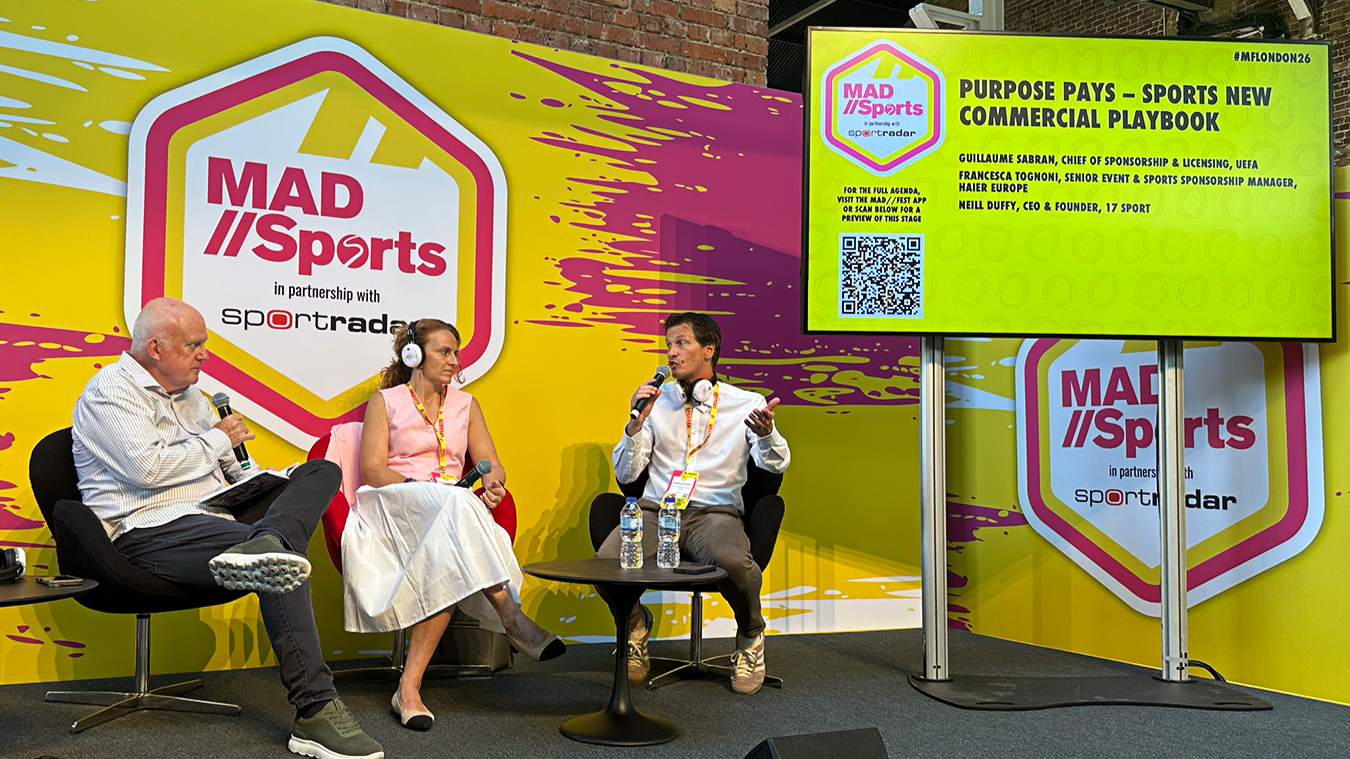
17 Sport’s key insights from MAD//Fest 2026 on driving real equity through purpose in sports marketing.
The marketing landscape is undergoing a profound structural shift. Last week at MAD//Fest London, amidst the high-energy atmosphere of the festival, two core themes emerged across the stages: the industrialization of "authenticity" is failing, and true commercial value now lives at the intersection of purpose, human connection, and long-term partnership.
As an agency, attending MAD//Fest from both a 17 Sport perspective and alongside our partners at the Women’s Sports Alliance (WSA) allowed us to look at these trends through a unique dual lens. Across both of our panels on the MAD//Sports stage, the consensus was clear: the old playbook of renting attention via logos and transactional reach is dead. The future belongs to those who build equity, empower individuals, and measure real-world outcomes.
Here is our reflection on the themes shaping sports marketing, insights from our sessions, and the broader cultural takeaways from the festival.
17 Sport: Moving from "Sponsorship" to "Strategic Partnership"
Taking place on the MAD//Sports stage, our panel, "Purpose Pays: Sport’s New Commercial Playbook", tackled the cynical misconception that purpose is merely a marketing slogan and has no long-term impact on social and commercial returns. Alongside Guillaume Sabran (Chief Sponsorship and Licensing, UEFA) and Francesca Tognoni (Senior Brands & Sponsorship Manager, Haier), 17 Sport’s Co-Founder and CEO Neill Duffy discussed how purpose, when treated as an operational strategy, delivers genuine pricing power and customer retention.
The session highlighted a critical evolution in how rights holders and global brands collaborate:
Guillaume shared how UEFA has bypassed traditional tournament-specific sponsorship to create a "strategic partner" category above individual competitions. Their work with Lidl and the Schwarz Group is an operational commitment to grassroots access, healthy nutrition, and the circular economy. As Guillaume noted: "Rights holders and brands have a responsibility... We are going from sponsorship to partnerships."
Francesca challenged the room to look beyond passive storytelling. For a technology-driven brand, sport provides the emotional bridge to build trust in a low-impulse category. By creating an "always-on" campaign offering physical experiences that touch local communities, Haier turns abstract brand values into commercial performance. Her framework is clear: “The consumer doesn't just want to see a logo. They want to build a relationship with a brand.”
The ultimate takeaway for the CMOs in the room was a shifting measurement paradigm: measure what you built, not what you reached. The data supports this shift unequivocally:
4% to 6% price premium achieved by purpose-led brands (Edelman).
40% higher customer retention rates (Deloitte).
40% increase in brand value, demonstrated by brands like Ally through equitable sports spend.
Women’s Sports Alliance (WSA): The Rise of the Athlete Creator
Immediately following, the conversation shifted to the individual catalyst of modern sports fandom: the female athlete. Led byJordan Guard (Founder, WSA), alongside Ruth Hooper (CMO, WSL Football) and WSL player Shania Hayles, the session "The Rise of the Female Athlete Creator" highlighted how player autonomy is reshaping commercial revenue.
The discussion focused on empowering athletes as distinct brand ecosystems.
Ruth Hooper spoke to the shift in the domestic media rights cycle: granting players immediate access to their own in-game clips via Scoreplay without traditional broadcaster holdbacks. With nearly 70% of players utilizing this in Season 1, the impact is structural: “More content for players, more visibility, more fans, more tickets.”
Shania Hayles offered a crucial perspective on the correlation between personal branding and athletic output, stating: “Being happier and more confident off the pitch makes me better on the pitch.” Fandom in the women’s game is deeply tied to personality, values, and multi-dimensional storytelling, whether that’s Shania’s fashion-forward brand or Phallon Tullis-Joyce’s background in marine biology.
Brands must understand that female athletes are highly discerning. In a WSA survey of 124 elite female athletes, 88% ranked shared values above financial compensation when choosing brand partners.
Increased visibility brings sharp challenges. The panel addressed the sobering reality that female players are 29% more likely to face targeted online abuse than their male counterparts. The WSL's proactive collaboration with Meta on tailored 'hidden words' tools underscored that protecting athletes is a prerequisite for commercial growth.
The Broader Festival Vibe: "The Human Touch" vs. Transactional Noise
Beyond our own sessions, MAD//Fest 2026 felt like a collective industry reckoning against superficial marketing. The festival's overarching theme, "The Human Touch," served as a benchmark to separate true cultural resonance from mere sales pitches.
The most impactful sessions mirrored our sentiment that partnerships must solve real-world problems:
Manchester City x Xylem x SPORTFIVE: A masterclass in operational sustainability. By using Xylem's water technology to optimize stadium operations (saving thousands of liters on pitch irrigation), the partnership drives bottom-line efficiency while using football as a megaphone to inspire wider industrial change.
Metro Bank x ECB and FatFace x Surfing England: Both highlighted the power of uncompromised funding. Metro Bank’s Girls in Cricket Fund and the FatFace Foundation's "no-strings" investment into para-surfing and female coaching proved that investing heavily in grassroots infrastructure builds immense long-term community equity.
Aston Villa Women x Underground Fan Club x M&C Saatchi: Their focus on building a distinct "away day" experience reminded us that while AI generates content churn, physical, shared experiences build lasting culture.
Our Reflections
If there is one cohesive takeaway from our time at MAD//Fest, it is that purpose in sports marketing has evolved from a progressive corporate social responsibility (CSR) initiative into a commercial imperative. The industry is moving past the era of passive endorsement; the modern consumer demands that brands actively co-author solutions to societal and environmental challenges alongside rights holders and athletes.
For 17 Sport, this reinforces our core conviction: purpose is not an additive layer to a sports partnership, it is the foundational infrastructure. Moving forward, the mandate for brands and marketing leaders is definitive:
Don’t just sponsor the ecosystem to be seen. Embed your brand into the fabric of the sport to drive measurable, positive impact for society, and empower the human beings within it to tell stories that build real equity.
To learn more about how we are bridging the gap between purpose and commercial performance, get in touch with the teams at 17 Sport and the Women's Sports Alliance.
